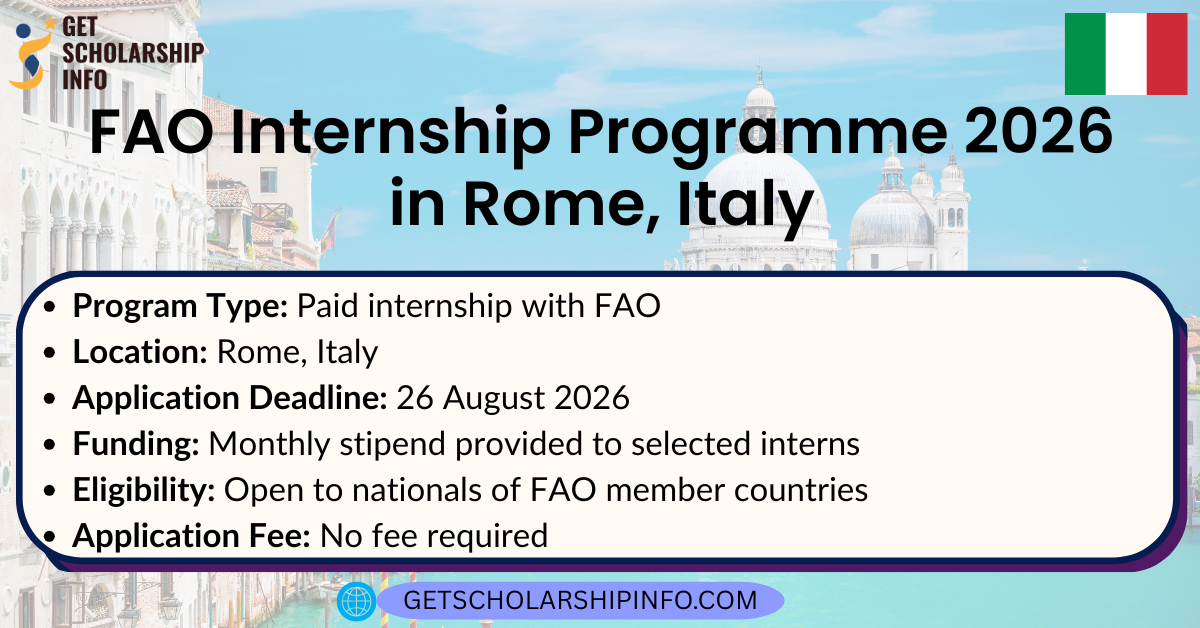
Young professionals passionate about fighting hunger and building sustainable food systems now have a valuable pathway through the Food and Agriculture Organization of the United Nations. The FAO Internship Programme at their Rome headquarters offers a meaningful way to gain hands-on international experience while contributing to global efforts on food security and agricultural development.
This opportunity welcomes motivated students and recent graduates to spend 3 to 11 months working alongside experts in one of the world’s leading organizations dedicated to ending hunger. It’s unpaid in terms of salary but includes a monthly stipend for those without other sponsorship. No application fees apply, and the call remains open until August 26, 2026, giving plenty of time to prepare a strong submission.
Open primarily to nationals of FAO member countries between 21 and 30 years old, this internship focuses on practical learning that complements your academic background. Whether your interest lies in policy, field projects, research, or technical areas, the program connects your skills to real-world challenges affecting millions of people worldwide.
Essential Information About the FAO Internship Programme:
Program Name: FAO Headquarters Internship Programme (Rome, Italy)
Host Organization: Food and Agriculture Organization of the United Nations
Location: Rome, Italy (with possible remote elements depending on assignment)
Duration: 3 to 11 months, depending on the specific Terms of Reference
Stipend Support: Monthly stipend provided if not sponsored by your university or another entity Application Deadline: August 26, 2026
Target Participants: Current students or recent graduates in relevant fields
Language Needs: Working knowledge of at least one FAO official language (English, French, Spanish, Arabic, Chinese, or Russian)
These basics show how accessible yet purposeful the program is for those serious about global development work.
What Interns Truly Gain from This Experience:
Participants walk away with far more than just a line on their CV. The internship lets you apply classroom theories to actual UN projects aimed at creating better production, better nutrition, better environments, and better lives , the core of FAO’s framework for the 2030 Agenda and Sustainable Development Goals.
You receive direct mentorship from experienced professionals in your assigned area. This guidance helps sharpen technical skills while building a deeper understanding of how international organizations operate. Many interns develop strong professional networks that last well beyond the program, opening doors to future careers in the UN system, NGOs, government agencies, or private sector roles in agriculture and food systems.
The multicultural environment in Rome fosters personal growth, improved communication abilities, and cultural adaptability , qualities highly valued by employers everywhere. You’ll contribute to meaningful work that impacts food security policies, climate resilience, or sustainable farming practices. For those without external funding, the monthly stipend helps cover basic living costs in Rome, reducing financial stress.
Additionally, the experience often clarifies career directions. Some interns discover passions for specific issues like rural development or biodiversity, while others gain clarity on advanced studies or job pathways. The rigorous yet supportive setting builds confidence in handling complex global challenges.
Who Can Join: Detailed Eligibility Breakdown:
FAO sets clear but fair requirements to ensure interns can contribute effectively:
- You must be enrolled in an undergraduate or graduate program at a recognized institution (or have recently graduated).
- Your studies should align with FAO’s work in food, agriculture, fisheries, forestry, or related fields.
- Age range is 21 to 30 years old at the time of application.
- Nationals of FAO member countries only.
- Working knowledge of at least one official FAO language is mandatory, with additional languages viewed favorably.
- Strong communication skills and ability to thrive in diverse, international teams.
Important restrictions include no previous FAO internships, no close family members already working at FAO, and the need for proper residence or immigration status in Italy before starting. The organization encourages applications from women, people with disabilities, and candidates from underrepresented or developing countries.
These criteria help FAO select individuals ready to engage seriously with the organization’s mission.
Wide Range of Fields Open to Interns:
FAO assignments cover diverse technical areas based on your background and current organizational needs. Common fields include:
- Agricultural Economics
- Food Security and Nutrition
- Climate Change and Environment
- Sustainable Agriculture
- Fisheries and Aquaculture
- Forestry Management
- Rural Development
- Policy and Governance
- Data Analysis and Statistics
- Digital Agriculture and Innovation
- Gender and Social Inclusion
- Emergency and Resilience
- Biodiversity and Natural Resources
- Livestock Production
- Plant Production and Protection
- Trade and Markets
This variety means almost any relevant academic focus can find a suitable placement. The exact tasks come from detailed Terms of Reference prepared by the hiring team.
Step-by-Step Guide to Applying Successfully:
The process is entirely online through the official FAO recruitment portal. Start by creating or updating your profile with accurate education history, experience, and language abilities. Attach a strong motivation letter explaining why you want to intern at FAO and how your skills match their work. Include proof of enrollment or graduation.
Submit everything well before the August 26, 2026 deadline. Applications go through screening, and only suitable candidates receive contact for further steps like interviews. FAO emphasizes complete, honest profiles , incomplete submissions get rejected.
If selected, you’ll receive clear details about your specific assignment, supervisor, and expectations. Remember that re-application is encouraged for those not chosen in earlier rounds.
Daily Life and Work Culture at FAO Headquarters:
Rome offers an inspiring backdrop for this experience. The headquarters buzzes with energy from staff representing nearly every nation. Interns typically work on research, data collection, report drafting, meeting support, or project assistance depending on their unit.
Expect a professional yet collaborative atmosphere where ideas from young talent receive genuine consideration. Regular check-ins with supervisors help track progress and address challenges. The program emphasizes continuous learning, so you’ll likely participate in internal seminars or training sessions too.
Living in Rome brings its own adventures , from historic sites to vibrant food scenes that align perfectly with FAO’s mission. Interns often share tips on affordable housing and making the most of the city during their stay.
Core Competencies You’ll Develop:
FAO looks for and helps strengthen several key abilities:
- Results Focus
- Teamwork
- Clear Communication
- Building Effective Relationships
- Knowledge Sharing and Continuous Improvement
These competencies serve you well long after the internship ends, whether in future UN roles or other sectors.
Why Choose FAO for Your International Internship:
Few organizations match FAO’s scale and impact on global hunger and sustainability. As a UN specialized agency with 195 members, it influences policies affecting billions. Interning here gives rare insight into how large-scale development work happens on the ground and at policy levels.
The emphasis on diversity creates a rich learning environment. You’ll collaborate with people from varied backgrounds, broadening your worldview. For those aiming for careers in international development, this experience carries significant weight on applications for future positions.
Preparation Tips That Can Make Your Application Stand Out:
Craft a motivation letter that tells your story authentically. Connect your academic or personal experiences directly to FAO priorities like sustainable food systems or leaving no one behind. Highlight any relevant volunteer work, research projects, or language abilities.
Research current FAO initiatives so you can reference them thoughtfully. Prepare for potential interviews by thinking about how you handle teamwork or problem-solving in multicultural settings. Gather all required documents early to avoid last-minute stress.
Challenges to Anticipate and How to Overcome Them:
Moving to Rome involves logistics like finding housing and adjusting to a new culture. The work can be demanding with tight deadlines on important projects. However, FAO provides support, and the stipend helps financially. Building connections with other interns often eases the transition and creates lasting friendships.
Time management becomes crucial when balancing internship duties with any ongoing studies or personal commitments.
Frequently Asked Questions?:
Does the FAO internship pay a salary?
No salary, but a monthly stipend is available for unsponsored interns to help with expenses.
Can recent graduates still apply?
Yes, as long as you graduated recently and meet the age and other criteria.
Is prior work experience required?
Not mandatory, but relevant academic focus and skills strengthen your application.
Are there any fees involved in applying?
FAO charges nothing at any stage of the process.
What languages are most useful?
English is primary, but knowledge of French, Spanish, or others gives you an advantage.
Can I do the internship remotely?
Most placements are in-person at headquarters, though some flexibility may exist depending on the role and circumstances.
How long does the selection process take?
It varies, but only shortlisted candidates are contacted. Apply early for better chances.
Is this open to all nationalities?
Nationals of FAO member countries only, with strong encouragement for underrepresented groups.
What happens if I have family working at FAO?
Such candidates are not eligible for the internship programme.
Can I extend my internship beyond 11 months?
Maximum duration is 11 months, and previous FAO interns cannot apply again.
Wrapping Up: Is This Internship Right for Your Goals?:
The FAO Headquarters Internship stands as an exceptional opportunity for driven young people ready to tackle global food challenges. It combines practical experience, professional development, and contribution to meaningful causes in a dynamic international setting.
With its long application window, supportive stipend, and focus on learning, it suits those seeking purposeful work rather than just any internship. Success requires genuine interest in FAO’s mission, solid academic grounding, and cultural openness.
If fighting hunger and promoting sustainable agriculture excite you, take time to build a compelling profile. This could become the launchpad for a rewarding career making tangible differences worldwide. Stay updated through the official FAO jobs portal and prepare thoroughly , opportunities like this reward dedication and passion.
The experience often transforms how participants view global issues and their own potential to address them. Many alumni credit their time at FAO with shaping their professional paths in positive, lasting ways.

I want to do internship
Thank you for your interest 😊
You can apply directly through the official FAO careers portal by creating your profile and submitting the required documents.
Make sure you meet the eligibility criteria before applying. Good luck 🙌
https://getscholarshipinfo.com/fao-un-internship-programme-italy-paid/