If you’re a mid-career professional who’s already making waves in your field but hungry for deeper impact, sharper skills, and connections that last a lifetime, this might be the opportunity you’ve been waiting for. The Presidential Leadership Scholars (PLS) program stands out as a one-of-a-kind experience that draws from the real-world lessons of four U.S. presidents across party lines. It’s not your typical leadership workshop or academic course; it’s an intensive, hands-on journey designed for people ready to tackle big challenges with fresh perspectives and proven strategies.
What makes PLS special is its focus on practical growth. Participants don’t just sit through lectures; they dive into reflection, collaboration across differences, and real projects that drive change in their communities or organizations. With applications closing very soon on July 19, 2026, now’s the time to explore whether this fits your path. Let’s break it all down so you can see the full picture and decide if it’s right for you.
Why This Program Matters in Today’s World:
In a time when divisions run deep and problems feel overwhelming, programs like PLS remind us that effective leadership comes from understanding history, embracing diverse views, and building genuine relationships. Backed by the presidential centers of George W. Bush, Bill Clinton, George H.W. Bush, and Lyndon B. Johnson, it brings together leaders from business, nonprofits, government, military, healthcare, education.
Over the past decade, nearly 600 alumni have gone through this, and the results speak volumes. Many report stronger confidence in leading change, better ability to work across perspectives, and real progress on projects that improve lives. It’s about turning good intentions into measurable outcomes, all while staying grounded in the wisdom of past administrations.
Unlike many executive programs that cost thousands and feel disconnected from daily work, PLS removes financial barriers completely for the core experience. This opens doors for talented leaders who might otherwise miss out. If you’ve got solid experience under your belt and a drive to do more, keep reading.
Key Details at a Glance:
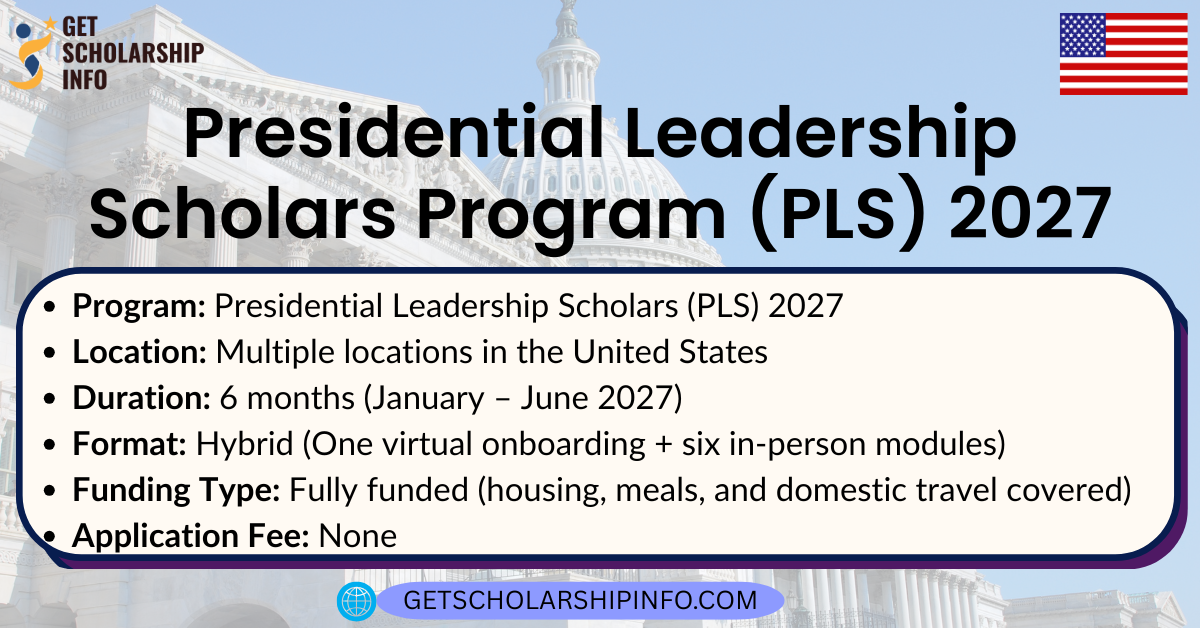
Program Type: Intensive six-month leadership development fellowship (not a degree program).
Host Locations: Modules rotate through presidential centers in the United States, with an onboarding webinar via Zoom.
Application Deadline: July 19, 2026, at 11:59 PM CT.
Program Dates: Starts with onboarding January 6, 2027, followed by in-person modules from January through June 2027.
Funding: Fully funded for tuition, housing, meals, and domestic travel during sessions, no cost to participants for these essentials.
Eligibility Focus: Primarily U.S. citizens or legal residents with significant professional experience (typically 10+ years).
Cohort Size: Around 60 high-potential leaders per class, selected for diversity and leadership potential. Application Fee: None.
These details show how accessible and focused the program is. It’s built for busy professionals who want to grow without derailing their careers.
What Participants Actually Gain from the Experience:
The real value shines through in what Scholars walk away with, tangible skills, a powerful network, and momentum on projects that matter.
You receive comprehensive support for the entire six-month journey. All major expenses are covered, freeing you to focus entirely on growth instead of logistics. This includes housing and meals at each module, plus domestic travel between sessions. The structure allows most people to keep working their regular jobs while dedicating focused time to the program, about 20 days total of in-person sessions spread across six modules.
One of the biggest gains is the personal leadership project (PLP). Every applicant proposes one, and it’s central to the experience. Whether it’s advancing an initiative at work, launching something new in your community, or scaling an existing effort, the program gives you tools, feedback, and accountability to make real headway in six months. Past projects have included fighting human trafficking, improving healthcare access, creating education pathways, and protecting natural resources. Scholars often report making significant progress, with 100% in some surveys noting advancement on their goals.
The curriculum hones four core areas that leaders use every day:
- Vision and communication
- Decision making under pressure
- Persuasion and influence
- Building strategic partnerships
You explore these through sessions with former administration officials, academics, business leaders, and practitioners. Expect deep discussions on presidential decision-making, evidence-based leadership methods, and practical ways to include more voices in problem-solving.
Perhaps the most lasting benefit is the network. You’ll join a diverse cohort and become part of an active alumni community of nearly 600 changemakers. Many alumni stay in touch, collaborate on projects, and support each other years later. Surveys show high percentages maintaining connections and working together across sectors. This isn’t just networking, it’s building relationships that bridge divides and amplify impact.
Participants also gain confidence and clarity. Alumni frequently mention feeling more purposeful, better equipped to handle complex challenges, and inspired to aim higher. One shared how it pushed her to use her gifts more fully instead of settling. Another highlighted authentic conversations that made him a more vulnerable, effective leader. These aren’t fluffy outcomes; they’re shifts that show up in promotions, bigger responsibilities, and community contributions.
Who Thrives in This Program: Eligibility Breakdown:
PLS targets established leaders, not beginners. The most successful applicants usually bring:
- Strong professional background: Typically 10 or more years of meaningful experience. That said, exceptionally qualified people with less can still apply if their track record stands out.
- Demonstrated leadership: A clear history of taking initiative, influencing change, and engaging others.
- Civic mindset: Genuine desire to create positive impact in communities, organizations, or beyond.
- Openness and collaboration: Willingness to seek feedback, listen to different viewpoints, and work with people who see the world differently.
- Commitment: Ability to fully participate in all modules and activities despite a demanding schedule.
Age-wise, you need to be at least 21, with no upper limit. Most participants are mid-career, positioned to apply what they learn for years ahead. No college degree is required.
Citizenship and residency matter: U.S. citizens living and working in the country, U.S. citizens abroad (who can cover any international travel themselves), or legal U.S. residents working in the country. The program emphasizes accessibility but has practical limits on international logistics.
Diversity is a strength here. Cohorts include people from varied sectors, backgrounds, and perspectives, women and men, people of color, veterans, educators, physicians, executives, and nonprofit leaders. This mix enriches every discussion and reflects the real world.
Fields and Sectors Where Leaders Excel:
While not tied to specific academic fields or “majors,” the program welcomes leaders working in almost any area where they can drive positive change. Common backgrounds include:
- Business and corporate leadership
- Nonprofit and social entrepreneurship
- Government and public service
- Military and veterans’ affairs
- Healthcare and medicine
- Education and youth development
- Environmental conservation and sustainability
- Technology and innovation
- Advocacy and human rights
- Community development and economic opportunity
- Arts, media, and cultural impact
- Philanthropy and foundations
The key isn’t your title or industry, it’s your leadership record and the potential of your Personal Leadership Project. If your work touches people’s lives and faces meaningful challenges, it likely fits.
A Closer Look at the Program Journey and Schedule:
The 2027 program kicks off with a Zoom onboarding on January 6 and runs through June. Modules are thoughtfully spaced so you can integrate learning back into your daily work:
- Module One: January 20–23
- Module Two: February 24–26
- Module Three: March 17–19
- Module Four: April 14–16
- Module Five: May 12–14
- Module Six: June 23–26
Each module happens at different presidential centers, giving you immersive exposure to historical context and leadership stories. Expect a mix of speaker sessions, group work, reflections, and site visits. Between modules, there are assignments, peer interactions, and progress on your PLP.
The intensity is real, it’s described as rigorous, but designed to respect your ongoing responsibilities. Many Scholars manage full-time jobs alongside it, though you’ll need employer understanding for travel days.
Step-by-Step Guide to Applying Successfully:
The application process is straightforward but thoughtful. You’ll submit everything online by the deadline, including:
- Personal and professional background details
- Responses to essay questions that dig into your leadership journey, challenges, and goals
- Information about your Personal Leadership Project
- Two recommendations (choose people who know your work well and can speak to your potential)
No application fee, which lowers barriers. After review, some applicants move to interviews in early October, with final decisions in December 2026.
Tips for a strong application: Be authentic about your experiences and aspirations. Clearly connect your PLP to the program’s themes. Show self-awareness and openness to growth. Highlight specific examples of leadership rather than general statements. Give recommenders plenty of time and context.
Even if you don’t get selected this round, many reapplicants succeed later. The process itself can clarify your goals.
Real Impact: Stories from Alumni:
Hearing from past participants brings the program to life. One Scholar led the first known all-woman heart transplant team and credits PLS with shaping her approach. Another fights human trafficking in Texas. Others have advanced conservation efforts globally, improved education access, supported refugees, and reduced unnecessary medical procedures.
Veterans, surgeons, educators, and executives all point to stronger networks, clearer purpose, and bolder action after the program. One alum reflected on how it helped her step beyond comfort zones and build authentic connections. These aren’t isolated wins, they show how the program equips people to create ripples of change.
How PLS Differs from Other Leadership Opportunities:
Many programs offer theory or short workshops. PLS combines historical insight, practical skill-building, peer learning across divides, and sustained support for your own project. The bipartisan presidential foundation backing gives it unique depth and neutrality. Plus, the full funding for core costs makes it more equitable than many pricey alternatives.
It’s not accredited and doesn’t offer college credit, but the real-world application and network often outweigh traditional credentials for mid-career growth.
Preparing Your Personal Leadership Project:
Your PLP is the heart of the application and experience. It should target a positive outcome for a specific group, be achievable in six months (even if part of something bigger), draw on your strengths, and benefit from the program’s insights.
Think about challenges in your work or community where leadership makes the difference. Maybe scaling a program, bridging gaps, influencing policy, or innovating solutions. The more concrete and impactful, the better. Reviewers want to see you’ve thought it through and are positioned to move it forward.
Common Questions About Life During and After the Program?:
How much work will I miss? Modules are mostly weekends or short blocks, but plan for full participation and possible extra travel days. Discuss with your employer early.
What about costs beyond what’s covered? You’re responsible for getting to your home airport, some incidentals, and any international travel if applicable. But the program covers the heavy lifting.
Will former presidents participate? Sessions often feature officials from their administrations and insights from their legacies, though direct involvement varies.
Alumni commitments? Many mentor new Scholars, share stories, and stay engaged, but it’s supportive rather than burdensome.
Is it only for certain political views? No. The program values diverse perspectives and seeks understanding across differences.
Final Thoughts: Is This Your Next Step?:
The Presidential Leadership Scholars program offers a rare blend of history, skill-building, community, and action. For leaders ready to reflect deeply, connect meaningfully, and drive change, it can be transformative. With the deadline approaching fast, take time to review the official site, reflect on your project idea, and gather your materials.
Whether you apply this cycle or use this as inspiration for future growth, opportunities like this highlight what’s possible when experienced leaders invest in themselves and each other. Check the full details and application at the official Presidential Leadership Scholars website. Your next chapter of impact might start here.
FAQs?:
What is the deadline for the 2027 Presidential Leadership Scholars program?
Applications close on July 19, 2026, at 11:59 PM CT. Don’t wait until the last minute.
Is the program fully funded?
Yes, tuition, housing, meals, and domestic travel during modules are covered. Participants handle only limited personal costs like home airport transport.
Who is eligible to apply?
Mid-career leaders (typically 10+ years experience) who are U.S. citizens or legal residents, at least 21 years old, with a strong leadership record and a solid Personal Leadership Project idea.
Do I need a college degree?
No, it’s not required. Experience and leadership potential matter most.
How selective is the program?
Highly selective, with around 60 Scholars chosen each year from a competitive pool. Focus on authenticity and impact in your application.
