
Writers often dream of dedicated time and space to focus on their craft while connecting with new cultures. The UNESCO City of Literature Wonju Residency makes this dream possible for one lucky writer each year. This eight-week program brings a creative professional to the peaceful Toji Cultural Centre in Wonju, South Korea, where natural beauty and literary heritage create the perfect environment for meaningful work.
Organized as part of the UNESCO Cities of Literature network, the residency promotes friendship and understanding between member cities. It gives writers a chance to produce new work while engaging with Korean culture and local literary scenes. Previous participants return home with fresh inspiration, completed pieces, and lasting international connections.
The program stands out because it offers comprehensive practical support alongside creative freedom. Writers live among fellow artists, participate in local events, and contribute a short piece inspired by their Korean experience. For anyone serious about literary work, this residency represents a rare opportunity to grow both personally and professionally.
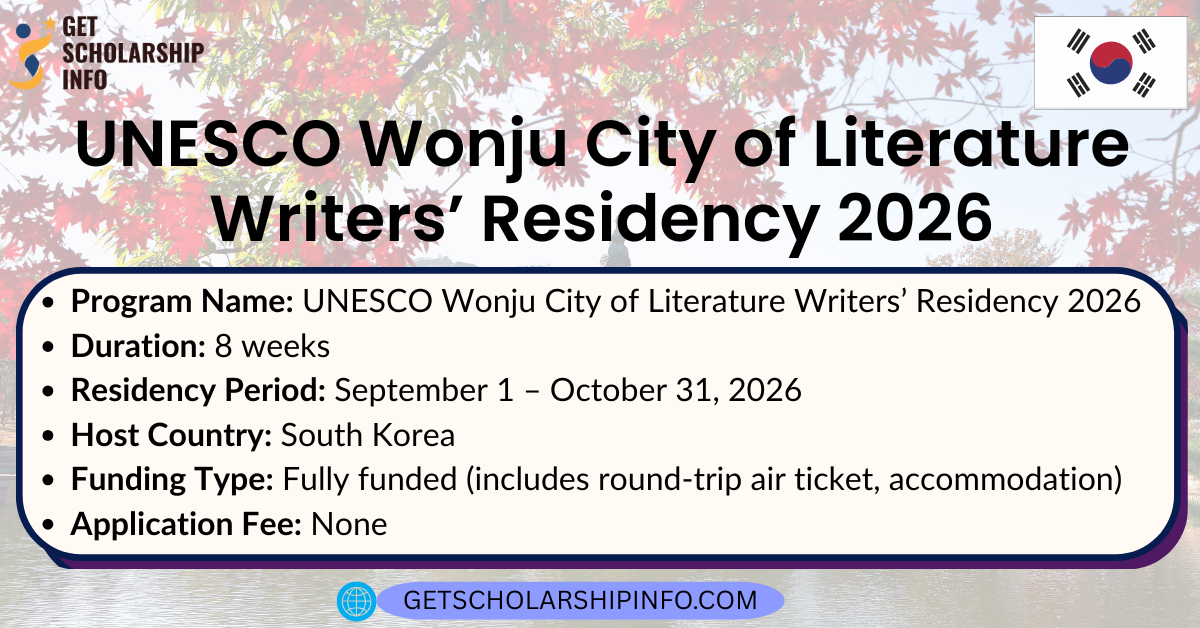
Key Details at a Glance:
Program Name: UNESCO City of Literature Wonju Residency
Host Location: Toji Cultural Centre, Wonju, South Korea
Duration: Eight weeks
Target Participants: Writers connected to UNESCO Cities of Literature
Support Level: Fully supported residency including travel and accommodation
Application Fee: None mentioned
The residency runs annually and focuses specifically on creative writing and cultural exchange.
What Writers Actually Receive and Gain:
The practical benefits remove almost all logistical worries. You get a round-trip air ticket to Korea, plus transportation on arrival and departure days. This support alone saves significant money and planning effort.
Your home for the eight weeks is a comfortable room at the Toji Cultural Centre. The facility provides organic meals, creating a healthy and convenient daily routine. Writers have access to shared spaces including a library, cafeteria, lounge, and laundry facilities. Each residence building offers a peaceful setting surrounded by beautiful natural scenery.
A dedicated writing room allows focused creative work without distractions. Many participants find this private space combined with the tranquil environment helps them make substantial progress on projects that felt stuck at home.
Beyond material support, the residency builds valuable connections. You live alongside Korean writers and artists during the same period, naturally forming friendships and professional relationships. Participation in local literary events, festivals, and the Wonju Literature Month gives you insider access to Korean cultural life.
The requirement to create and submit a short creative piece about Wonju or Korea often leads to new published work. This output, along with the overall experience, strengthens your writing portfolio and international profile. Many writers discover fresh perspectives that influence their future books and projects.
The cultural immersion aspect proves particularly rewarding. Learning about Korean literature and daily life enriches your worldview and often sparks ideas that wouldn’t emerge in familiar surroundings. These experiences create deeper, more authentic writing for years afterward.
Who Should Apply: Clear Eligibility Criteria:
The program targets writers with established experience rather than complete beginners. You need at least five years of creative writing practice and at least one published work (in English or Korean, including translations).
Language skills matter for meaningful participation. An upper-intermediate level in English or Korean helps you engage with events and other residents. While perfect fluency isn’t required, basic communication ability makes the experience much richer.
Strong interest in Korean culture and literature is essential. Successful applicants show genuine curiosity and willingness to participate in local activities, interviews, and festivals.
Connection to the UNESCO Cities of Literature network strengthens applications significantly. Current residents of member cities receive priority, though writers with verifiable past connections can also apply. You must clearly indicate your current country and city affiliation.
The program expects active participation. Writers need to attend events, produce work during the residency, and submit a short creative piece by the sixth week. This contribution stays with Wonju City for promotional use, while you retain rights to your broader creative output.
Creative Fields and Writing Genres Welcomed:
The residency welcomes writers working in various literary forms. While specific genres aren’t strictly limited, the program particularly suits those engaged in:
- Fiction and Novel Writing
- Poetry and Verse
- Creative Nonfiction and Essays
- Literary Journalism
- Short Story Writing
- Playwriting and Script Development
- Memoir and Personal Narrative
- Cultural Criticism
- Children’s and Young Adult Literature
- Literary Translation
The flexible nature means writers from different backgrounds can benefit. The key requirement remains demonstrated commitment to creative writing and openness to cultural exchange.
How to Prepare and Submit Your Application:
Applications require a completed form plus supporting documents that prove your writing experience. Include clear evidence of at least five years of practice and at least one published work. Scans of book covers, copyright pages, or ISBN verification materials work well.
Take time with your supporting statement. Explain your connection to UNESCO Cities of Literature, your interest in Korean culture, and what you hope to achieve during the residency. Be specific about projects you want to advance or new ideas you want to explore.
Highlight any previous international experience or cross-cultural work. These details show your readiness for an immersive residency abroad.
Submit everything through the proper channels before the closing date. Late or incomplete applications typically cannot be considered.
Daily Life at Toji Cultural Centre:
The centre sits in a scenic location surrounded by mountains and nature. Writers describe the environment as peaceful and inspiring, with beautiful views that stimulate creativity.
Accommodation buildings offer comfortable private rooms with basic amenities. Shared facilities include a well-stocked library, seminar rooms, exhibition spaces, and a cafeteria. The setup encourages both solitary writing time and natural social interaction with other residents.
Meals feature organic ingredients, supporting health and wellbeing during your stay. While full meal service has some limitations on weekends and holidays, residents can prepare simple breakfasts and snacks using available kitchen facilities.
The surrounding area provides opportunities for walks, cultural exploration, and quiet reflection. Many writers find the balance between structured events and free time particularly productive.
Making the Most of Your Residency Experience:
Successful residents approach the program with openness and curiosity. Participate actively in local events while protecting enough private writing time to meet your creative goals.
Build relationships with Korean writers and artists. These connections often become some of the most valuable outcomes of the residency.
Document your experiences thoughtfully. Notes, photos, and reflections can fuel future writing projects long after you return home.
Stay flexible with your schedule. Cultural events and spontaneous opportunities often provide the richest material for new work.
Why Wonju and South Korea Offer Special Inspiration:
Wonju’s designation as a UNESCO City of Literature reflects its deep literary heritage and active cultural scene. The city balances modern development with respect for tradition, creating a stimulating environment for writers.
South Korea’s dynamic literary culture includes strong traditions of poetry, fiction, and social commentary. Exposure to these traditions often challenges and enriches visiting writers’ perspectives.
The natural beauty surrounding Toji Cultural Centre ; mountains, seasonal changes, and peaceful landscapes , provides constant creative fuel. Many participants produce their strongest work during the residency.
Cultural Exchange and Its Lasting Impact:
The residency goes beyond individual writing time. It builds bridges between literary communities across countries. Your presence and participation contribute to ongoing dialogue within the UNESCO network.
Many alumni maintain connections with Wonju and fellow residents. These relationships lead to translations, joint projects, and continued cultural exchange years later.
The short creative piece you produce becomes part of Wonju’s literary archive while demonstrating your engagement with Korean themes. This requirement often results in beautiful, meaningful work.
Practical Tips for Writers Considering This Residency:
Review all requirements carefully before applying. Make sure you can fully commit to the dates and participation expectations.
Prepare physically and mentally for eight weeks away from home. Think about how you’ll maintain your writing routine in a new environment.
Research Korean literature and culture beforehand. This preparation helps you engage more deeply during your stay.
Consider what specific project or creative goal you want to advance. Having clear intentions often leads to more satisfying results.
The Selection Process Explained:
Applications receive careful review based on submitted materials. An independent panel makes the final decision, focusing on writing quality, experience, and fit with residency goals.
Notification comes relatively quickly after the closing date. Both the selected writer and their city coordinator receive word before late July.
If the chosen writer cannot participate, an alternate candidate steps in. This ensures the residency always moves forward smoothly.
Preparing for Life in South Korea:
Basic Korean phrases help with daily interactions, though English works for many official activities. The residency provides enough support that language barriers rarely prevent meaningful experiences.
Pack clothing suitable for variable weather and comfortable writing sessions. Consider items that help you feel at home in your residence room.
Stay open to new foods and customs. Korean hospitality and cuisine often become highlights for international visitors.
Long-Term Benefits for Your Writing Career:
The residency adds international credentials to your biography. Participation in a UNESCO program carries prestige that helps with future grants, publications, and invitations.
New work produced during or inspired by the residency often finds publishing homes more easily due to its unique perspective.
The friendships and professional connections frequently lead to translation opportunities, reading invitations, and collaborative projects.
Many writers report renewed creative energy and clearer artistic direction after the experience. The break from normal routines combined with rich new input proves transformative.
FAQs About the UNESCO City of Literature Wonju Residency:
Do I need to be a published author to apply? Yes. You need at least one published work and five years of creative writing experience.
Is knowledge of Korean language required? Upper-intermediate English or Korean proficiency is necessary for full participation.
What costs does the residency cover? It provides round-trip air travel, local transportation, accommodation, meals, and workspace. Participants cover personal expenses.
Can I bring family members or partners? The residency is designed for individual writers. Accommodation and support focus on the selected participant.
What types of writers are most successful? Writers who show genuine interest in cultural exchange and commitment to producing work during the residency tend to thrive.
Will I have private writing time? Yes. While events are part of the experience, the schedule includes substantial unstructured time for individual creative work.
What happens to the short creative piece I submit? Wonju City retains copyright for promotional use, but you can still develop and publish expanded versions of the material.
Is the residency suitable for early-career writers? The five-year experience requirement means it works best for writers with some established practice.
Can the dates be changed or deferred? No. The residency runs on fixed dates. Selected writers must be able to participate fully.
How competitive is the selection process? It is selective, with one spot available annually. Strong writing samples and clear connections to UNESCO Cities of Literature improve chances.
Final Thoughts on This Unique Literary Opportunity:
The Wonju Residency stands out as one of the more generous and well-organized programs in the UNESCO Cities of Literature network. It balances practical support with meaningful cultural engagement, creating conditions where serious writing can flourish.
For writers ready to step outside their usual environment, this eight-week immersion offers something special. The combination of natural beauty, literary community, and dedicated time away from daily responsibilities often leads to breakthrough creative periods.
If your work would benefit from international perspective and you meet the experience requirements, consider applying. The residency could provide exactly the space and inspiration needed to take your writing to the next level while contributing to global literary dialogue.
The experience of living among Korean writers in a purpose-built creative centre leaves most participants changed in positive ways. Many return home with completed manuscripts, new friends, and renewed passion for their craft.
Take time to prepare a thoughtful application that showcases both your writing achievements and your enthusiasm for cultural exchange. A successful residency at Wonju could become one of the most memorable and productive chapters in your literary journey.
