Talented graduates from Commonwealth countries who want to earn a master’s degree while experiencing a new culture now have a special pathway through the Queen Elizabeth Commonwealth Scholarships. This fully funded programme lets you study for up to two years at respected universities in low and middle-income Commonwealth nations. It connects you with academic excellence, cultural exchange, and a global network of like-minded people committed to making a difference.
The scholarships focus on students who plan to use their education to solve problems back home. You receive complete financial support so you can concentrate fully on learning and personal growth instead of worrying about money. Although specific cycles open and close each year, the core opportunity repeats regularly, giving motivated candidates multiple chances to apply.
What Makes This Scholarship Special:
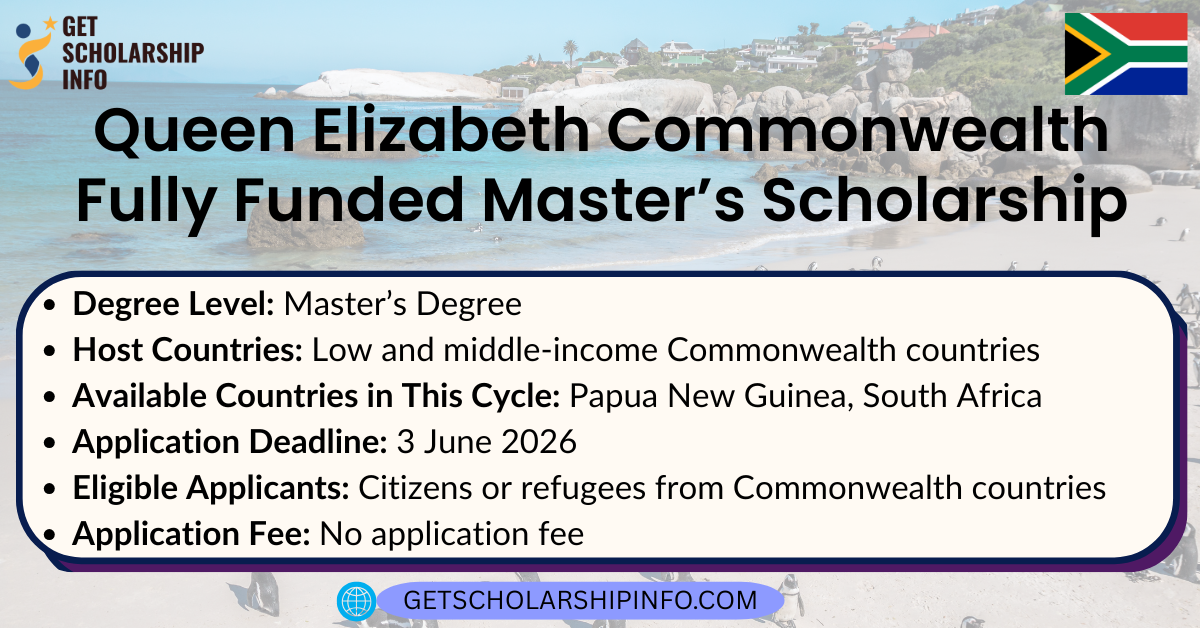
Scholarship Name: Queen Elizabeth Commonwealth Scholarships (QECS)
Degree Level: Two-year Master’s programmes
Host Countries: Low and middle-income Commonwealth nations
Funding Type: Fully funded
Application Fee: None
Eligibility Focus: Citizens of Commonwealth countries (or refugees) applying outside their home country
These points show how the programme removes financial barriers while encouraging genuine cross-cultural learning.
Benefits That Go Far Beyond Tuition:
Successful scholars receive a complete support package designed to make the study experience smooth and productive. Full tuition coverage means you never pay university fees. A living stipend helps with daily expenses, while return economy flights get you to and from your host country comfortably.
An arrival allowance helps with initial setup costs, and you can request a research support grant when needed for projects or fieldwork. This financial peace of mind lets you immerse yourself in studies, build relationships, and explore your new surroundings without constant money stress.
The real value runs deeper. Scholars develop new perspectives by living in a different country and working with local communities. Many form lifelong friendships and professional connections across the Commonwealth network. The experience often strengthens leadership abilities, cultural awareness, and problem-solving skills that prove useful throughout your career.
Upon returning home, graduates frequently apply their enhanced knowledge to local challenges, contributing to sustainable development goals in areas like health, education, environment, and governance. The scholarship essentially invests in people who want to create positive change.
Who Can Apply and What You Need:
The programme welcomes citizens (and refugees) from Commonwealth countries who meet basic academic standards. You must hold an undergraduate degree with at least a 2:1 equivalent and plan to study full-time on campus in a country different from your own citizenship.
There is no upper age limit, making it suitable for recent graduates and more experienced professionals alike. You cannot apply to study in your home country or in high-income nations like the UK, Australia, Canada, or New Zealand. The focus stays on low and middle-income host countries to promote meaningful exchange.
English serves as the main language of instruction, though specific universities may have their own requirements. Previous study or work in English often satisfies this without needing extra tests.
Available Study Fields and Host Universities:
QECS covers a wide range of subjects depending on the host university for each cycle. Common areas include:
- Public Health
- Education
- Environmental Science
- Engineering
- Law and Governance
- Agriculture and Food Security
- Economics and Development Studies
- Computer Science and Technology
- Social Sciences
- Business and Management
- Humanities and Cultural Studies
Each cycle features specific universities and eligible courses. Always check the latest list when applications open, as offerings change slightly between rounds. This variety allows you to find programmes that truly match your interests and future goals.
How to Prepare and Submit a Strong Application:
Applications typically open twice yearly, once around November/December and again in March/April. The process involves two main parts: completing the QECS online form and applying separately to your chosen university for admission.
Start by researching available universities and courses carefully. Read the application guidance and FAQs thoroughly before beginning. The QECS form includes sections on personal details, academic history, your chosen programme, and three important statements.
Your statements need genuine thought. Explain why the specific course and country appeal to you, how it connects to challenges in your home community, and how you plan to use the experience after returning. Be honest and specific, generic answers rarely succeed.
Upload supporting documents including transcripts, degree certificates, and two references. One academic reference is preferred, but professional ones work if necessary. Submit everything before the deadline, as late or incomplete applications are not accepted.
Writing Winning Personal Statements:
The three required statements form the heart of your application. Take time to craft them thoughtfully.
For the plan of study, clearly explain your course choice, research into the university, and how it fits your career vision. Show genuine enthusiasm and preparation.
The development impact statement should link your studies to real problems back home and the UN Sustainable Development Goals. Describe specific skills you hope to gain and practical ways you will share knowledge upon return.
The networking statement highlights your existing connections and how you plan to build new ones during your time abroad. Use concrete examples from your past to demonstrate relationship-building abilities.
Keep responses within word limits and avoid any copying, plagiarism leads to immediate disqualification.
Life as a Queen Elizabeth Commonwealth Scholar:
Scholars often describe their time abroad as transformative. You live and study in a new cultural context while pursuing advanced education. Host universities provide academic support, and the broader Commonwealth network offers additional mentoring and events.
Daily life involves balancing coursework, research, and cultural adjustment. Many scholars participate in community projects or university activities that deepen their understanding of local issues. The stipend covers basic needs, though careful budgeting helps with extras.
Returning home brings both challenges and opportunities. Graduates frequently use their enhanced skills to improve local systems, start initiatives, or pursue further studies with stronger profiles.
Practical Considerations Before Applying:
Think carefully about your ability to live abroad for two years. Research visa requirements, climate differences, and cultural norms for your target country. Discuss plans with family and consider how the experience fits your long-term goals.
Financial planning remains important even with full funding. The stipend supports comfortable living but may not cover every luxury. Health insurance and personal savings provide helpful buffers.
Tips for a Competitive Application:
Strong candidates show clear motivation, realistic plans, and commitment to community impact. Tailor every part of the application to the specific university and course. Provide complete academic records and strong references.
Proofread everything multiple times. Ask trusted mentors to review your statements for clarity and authenticity. Submit early to avoid technical issues near deadlines.
Previous unsuccessful applicants can try again in future cycles, past results do not affect new applications.
Common Questions About QECS?:
Can I apply to more than one country?
Yes, you may submit separate applications for different host countries, though only one per university.
Is there an age limit?
No age restriction exists as long as you meet academic and eligibility rules.
Do I need university admission before applying?
No, though applying to the university around the same time is recommended. Some flexibility exists depending on the institution.
Can I bring family members?
The scholarship supports only the scholar. Dependants would be your full responsibility.
What happens if my English is not perfect?
Requirements vary by university. Many accept previous English-medium education instead of formal tests.
Are part-time or online programmes eligible?
No. QECS funds only full-time, on-campus master’s degrees.
Will previous applications affect new ones?
No. Each cycle receives fresh, independent review.
Can I work during the scholarship?
Check host country regulations, but focus should remain on studies.
What support exists for disabilities?
Contact individual universities about specific facilities, as provisions vary.
Making the Most of Your Scholarship Experience:
Once awarded, engage fully with your new academic community. Build relationships with professors and fellow students. Document your learning and reflect regularly on how it connects to your home context.
Participate in Commonwealth events and scholar networks when possible. These connections often prove as valuable as the degree itself.
Prepare thoughtfully for your return by identifying specific ways to apply new knowledge locally. Many scholars develop projects or partnerships during their studies that continue afterward.
Why This Scholarship Matters in Today’s World:
In an interconnected but unequal global landscape, programmes like QECS promote genuine exchange and capacity building. By supporting students from Commonwealth nations to study in other member countries, it strengthens regional expertise and fosters mutual understanding.
Scholars become part of a legacy of positive change-makers. Their contributions, whether in healthcare, education, environmental protection, or governance, help address shared challenges while celebrating diversity.
Final Advice for Future Applicants:
The Queen Elizabeth Commonwealth Scholarships reward preparation, authenticity, and vision. Take time to research options thoroughly when cycles open. Write from the heart about your goals and commitment to community development.
Even if your first attempt doesn’t succeed, use the experience to strengthen future applications. The opportunity to earn a fully funded master’s degree while gaining international perspective is rare and powerful.
Stay informed through the official ACU website and prepare well in advance. For many recipients, this scholarship becomes the catalyst for meaningful careers dedicated to positive impact across the Commonwealth and beyond.

Hm flush keep itself
“Could you please clarify what you mean?”
Interested
Must read all the details about the program and apply for it.It’s great oppurtunity for all but especially if you are from commonwealth countries or developing countries.