Climate change talks at the highest levels can feel distant from everyday students, but programs like the COP Simulation change that completely. The British University in Egypt, together with UNDP Egypt, runs this annual international initiative that lets university students experience real climate negotiations firsthand. Now in its fifth year, the programme prepares young people to become active voices in global climate action as the world heads toward COP31 in Antalya, Türkiye.
Participants from different countries come together to simulate the Conference of the Parties (COP) process. They build knowledge about climate issues, practice diplomatic skills, conduct research, and work as a team to create solutions. The experience goes far beyond lectures or textbooks. Students develop practical abilities in negotiation, policy writing, and leadership while connecting with peers who share their passion for a better planet.
Past editions have involved around 160 young people each year from many backgrounds and universities. The programme has grown stronger with support from Egyptian ministries, embassies, and a wide network of academic and international partners. It turns participants into more confident advocates who understand how international decisions actually get made.
Key Details at a Glance:
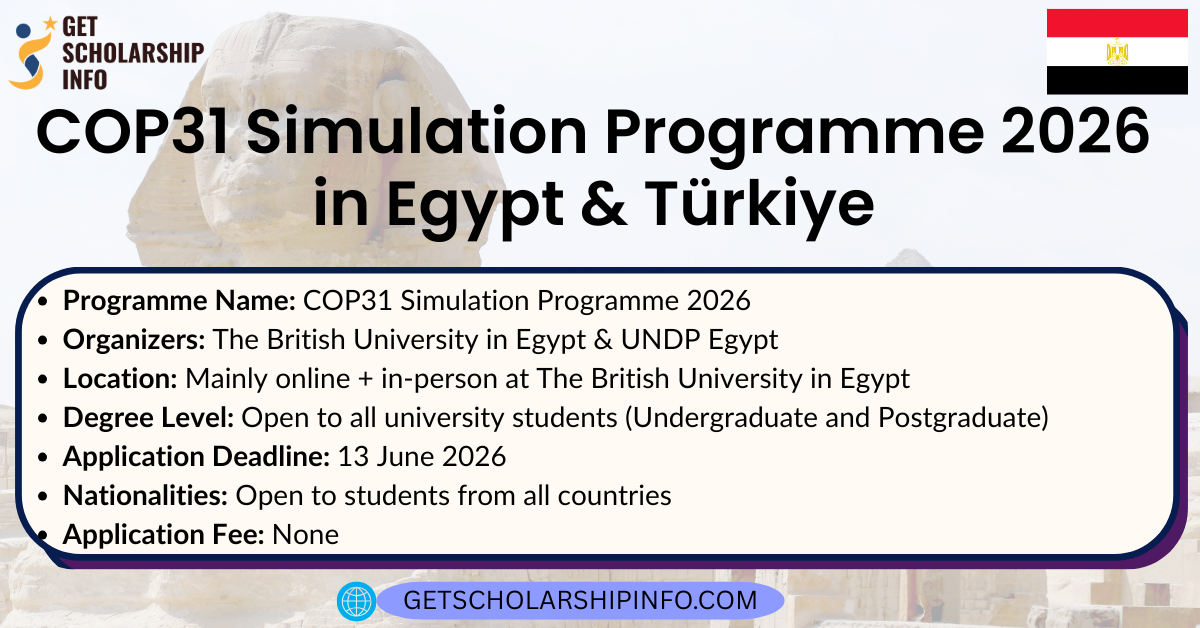
Programme Name: COP31 Simulation Programme
Organizers: The British University in Egypt and UNDP Egypt
Focus: Climate negotiations and youth leadership
Location of Main Activities: Primarily at The British University in Egypt
Target Participants: University students worldwide
Duration: Multi-phase programme including capacity building and simulation conference
Certificate: Official certificate upon successful completion
Participation Cost: Not specified as a paid scholarship but offers valuable skill-building experience
The initiative connects students to a global network of over 600 past participants and emphasizes hands-on learning in diplomacy and research.
What Participants Gain from Joining the COP Simulation:
Students walk away with much more than just memories. The programme builds real competence in climate literacy, helping you understand complex environmental, economic, and social issues at a deeper level. You learn how different countries approach climate challenges and why negotiations can be so difficult.
One of the biggest benefits is improved diplomatic and negotiation skills. Through role-playing as country delegates, you practice building alliances, presenting positions, and finding compromises. These abilities prove useful in many future careers, whether in international relations, environmental work, business, or policymaking.
Research and policy development form another core gain. Participants create mentored papers on important topics, which may get published in the COP Simulation Journal. This experience strengthens writing, analytical thinking, and evidence-based argumentation, skills employers highly value.
The programme creates lasting connections. You join a growing network of young changemakers from around the world. These friendships and professional relationships often continue long after the simulation ends, opening doors to future collaborations and opportunities.
Leadership qualities grow naturally as you work in teams, contribute to group decisions, and help shape a youth-led declaration. Many participants discover new confidence in public speaking and advocacy. The official certificate recognizes your achievements in climate diplomacy, negotiation, and policy research, adding a strong line to your resume or graduate school applications.
Exposure to international experts and real diplomatic processes gives valuable perspective. You see how global decisions affect local communities and understand the importance of inclusive solutions. This broader worldview helps you become a more effective advocate in your own country or community.
Who Should Consider This Programme: Eligibility and Profile:
The COP Simulation Programme welcomes university students who care deeply about climate issues and want to engage with global decision-making. While specific academic backgrounds aren’t strictly limited, successful participants usually show readiness to dive into complex topics and collaborate across cultures.
Students from any nationality and university can apply. The programme actively seeks diverse voices, recognizing that effective climate solutions need perspectives from all regions. Whether you study environmental science, international relations, law, economics, political science, or other fields, your unique viewpoint adds value.
The most important qualification is genuine motivation. Organizers look for students ready to commit time and energy to learning, researching, and participating fully in all phases. Previous experience in Model UN, debate clubs, or environmental groups can help, but enthusiasm and willingness to learn matter most.
The programme suits both undergraduate and postgraduate students who want to bridge theory with practice. If you feel frustrated by how distant global climate talks seem and want to understand the process from inside, this experience was created for people like you.
Main Areas Covered in the Simulation:
While the focus stays on climate negotiations, the programme touches many related fields. Participants explore topics across several interconnected areas:
- Climate Science and Literacy
- International Diplomacy and Negotiations
- Climate Policy and Advocacy
- Environmental Economics and Finance
- Sustainable Development
- Just Transition Strategies
- Loss and Damage Issues
- Climate Justice
- Research and Evidence-Based Policymaking
- Cross-Cultural Collaboration
- Leadership and Teamwork in Global Settings
These areas reflect the real complexity of COP discussions. Students gain exposure to scientific, political, economic, and social dimensions of climate action, making the learning well-rounded and practical.
Structure of the COP31 Simulation Programme:
The programme unfolds in clear phases designed to build skills progressively. It starts with a capacity building section that covers climate basics, diplomacy fundamentals, and negotiation techniques. This preparation ensures everyone begins with shared understanding.
Next comes mentored research work. Students develop policy papers on key agenda topics with guidance from experts. These papers may appear in the official simulation journal, giving participants a tangible publication outcome.
The highlight is the simulation conference itself. Around 150 students act as delegates, negotiators, and observers. They debate proposals, work through differences, and vote on solutions in a realistic setting at The British University in Egypt.
Finally, the programme produces a youth-led declaration that captures the group’s positions and recommendations. Top performers sometimes get chances to present outcomes at actual COP-related events.
This step-by-step approach helps students grow gradually from learners to active contributors.
Building Skills That Matter in Today’s World:
Climate issues affect every sector, so the abilities developed here have wide application. Negotiation skills help in business deals, community organizing, and everyday conflict resolution. Research experience strengthens academic work and prepares you for advanced studies.
Cross-cultural teamwork teaches adaptability and empathy, qualities increasingly important in globalized workplaces. Public speaking practice reduces anxiety and improves presentation abilities for any future role.
The programme also builds resilience. Negotiations involve setbacks and compromises, teaching students how to stay constructive under pressure. Many participants report greater confidence in voicing opinions and proposing solutions after completing the simulation.
The Power of Youth Voices in Climate Action:
Young people bring fresh ideas, urgency, and creativity to climate discussions. The COP Simulation amplifies these voices by giving participants real tools and platforms. The youth-led declaration presented at COP shows decision-makers that students understand the issues and have thoughtful proposals.
Past participants have gone on to influence policy in their home countries, join international organizations, or continue advocacy work. The network of alumni provides ongoing support and inspiration. Being part of this community means you never work alone in your climate efforts.
Life During the Programme: What to Expect:
Participants describe the experience as intense but incredibly rewarding. Days include workshops, group discussions, research time, and simulation sessions. Evenings often involve informal networking and cultural sharing among delegates.
The diverse group creates a rich learning environment. You hear firsthand accounts from students in climate-vulnerable countries and learn about innovative solutions from different regions. Friendships form quickly in this shared purpose setting.
The British University in Egypt provides a modern, supportive campus for the activities. Its location offers a blend of academic facilities and access to Cairo’s rich history and culture during free time.
Tips for a Strong Application and Successful Participation:
When preparing your application, clearly explain why climate action matters to you and what you hope to contribute. Share any relevant experiences, even if informal, such as local environmental projects or school clubs.
Show openness to different viewpoints. The simulation requires listening carefully and finding common ground, so highlight your teamwork abilities.
Once accepted, prepare by reading about current climate issues and the COP process. Stay organized with research deadlines and practice speaking clearly about your positions.
During the programme, engage actively but respectfully. Ask questions, support your teammates, and remain curious. The most successful participants balance strong advocacy with willingness to compromise when needed.
Why Partner Organizations Believe in This Programme:
Support from the Egyptian government, British Embassy, UNDP, and many universities shows the programme’s recognized value. Strategic partnerships with institutions like Stanford, Oxford, and others bring additional expertise and credibility.
These collaborations ensure high-quality mentoring and realistic simulation elements. The broad network also creates more opportunities for outstanding participants.
How the Programme Has Evolved Over Five Years:
Each edition builds on lessons from previous ones. Innovations like specialized research labs in past years addressed emerging topics such as climate finance and just transitions. The programme continues refining its approach to remain relevant as global climate talks progress.
The consistent growth in participant numbers and partner involvement demonstrates its effectiveness. Students, universities, and policymakers all see the worth of investing in youth preparation for COP processes.
Preparing for Your Role as a Climate Advocate:
Completing the simulation marks a beginning rather than an end. Many graduates continue their involvement through alumni activities, local initiatives, or further studies in environmental fields.
The certificate and network provide solid foundations for applications to graduate programmes, jobs, or fellowships. More importantly, participants gain clarity about their personal contribution to climate solutions.
FAQs About the COP31 Simulation Programme?:
Is this programme only for students studying climate-related subjects? No. Students from many academic backgrounds participate successfully. Passion for climate action and willingness to learn matter more than your major.
Do participants need previous negotiation experience? No prior experience is required. The capacity building phase teaches necessary skills to everyone.
Are there costs involved in joining? The programme focuses on skill development and does not function as a traditional funded scholarship. Check the official application for any participation details.
Can students from any country apply? Yes. The programme welcomes international applicants and values geographic and cultural diversity.
What kind of certificate do graduates receive? Successful participants earn an official certificate highlighting achievements in climate diplomacy, negotiation, and policy research.
How much time does the programme require? It includes several phases spread over weeks, with intensive periods during capacity building and the simulation conference.
Will I get to interact with real climate experts? Yes. The programme provides engagement with international experts and mentors throughout.
Is the simulation open to both undergraduate and graduate students? Yes. The programme suits motivated students at different stages of their university education.
How does this programme connect to the actual COP31? It prepares youth voices for real negotiations through realistic practice, with outcomes potentially presented at COP events.
What happens after the programme ends? Graduates join a global alumni network and receive support for continued climate advocacy in their own communities and careers.
Making Your Voice Count in Global Climate Efforts:
The COP31 Simulation Programme offers a rare chance to move from observer to active participant in shaping climate responses. It equips students with knowledge, skills, and connections needed to make meaningful contributions.
If you care about environmental justice, sustainable development, or simply want to understand how the world addresses its biggest challenges, consider applying. The experience will likely shift how you see both climate issues and your own potential to help solve them.
The road to COP31 represents more than one event. It symbolizes growing youth involvement in decisions that will determine our shared future. Programmes like this ensure young people don’t just watch from the sidelines but help write the next chapters.
Take time to reflect on your motivations and prepare a thoughtful application. The skills and perspectives you gain could influence your path for years to come, while contributing to something larger than any single person.
Climate action needs dedicated, informed, and collaborative leaders. Through this simulation, you can develop exactly those qualities while becoming part of a supportive global community working toward the same goals.
The British University in Egypt and its partners have created something special, a space where students practice real diplomacy and leave ready to drive change. For many participants, it becomes a turning point in their personal and professional journeys.
