
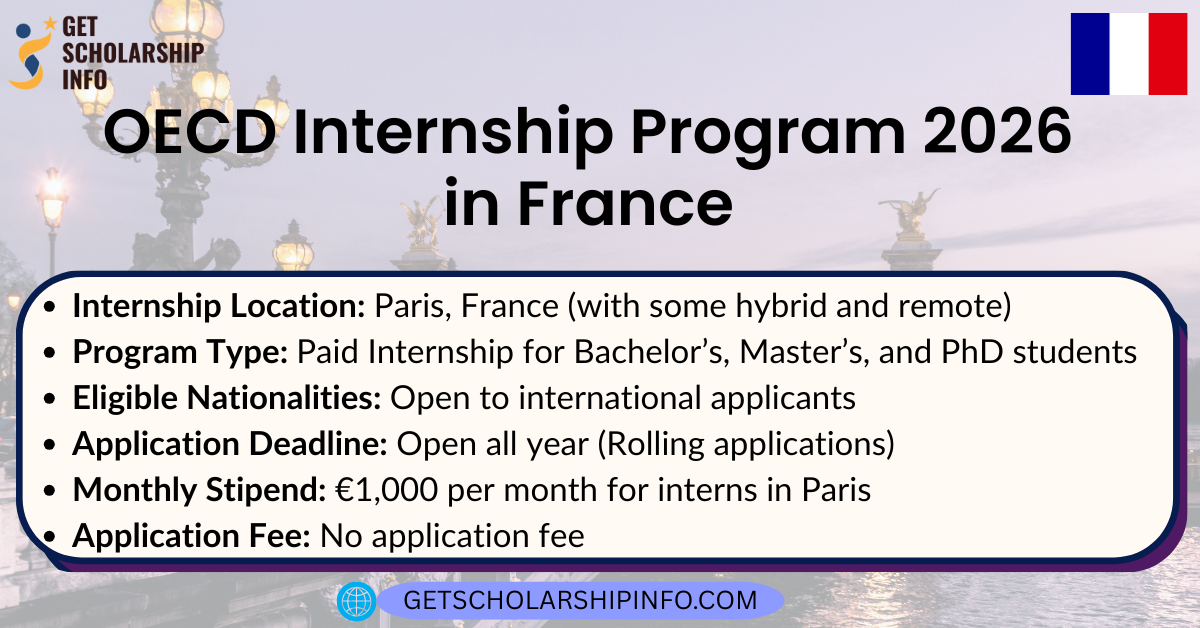
Students who want real-world experience in international policy often look for chances to work alongside experts on important global issues. The OECD Internship Programme offers exactly that kind of opportunity. It brings motivated students from many different backgrounds into the Organisation for Economic Co-operation and Development to help with research, analysis, and day-to-day operations.
This is not a traditional paid job with a big salary, but it provides meaningful financial support through a monthly contribution toward living expenses. There is no application fee, and internships are available throughout the year on a rolling basis. You can work in person in Paris, in a hybrid setup, or even fully remotely depending on the team’s needs. The programme welcomes students enrolled in bachelor’s, master’s, or PhD programmes as long as your studies continue during the internship period.
Key Programme Details:
Organisation: Organisation for Economic Co-operation and Development (OECD)
Location: Primarily Paris, France (with remote and hybrid options)
Duration: 1 to 6 months (can be extended up to 12 months total)
Allowance: €1,000 per full month worked (for those based in Paris)
Application Process: Rolling basis , apply anytime
Eligibility Focus: Students in relevant degree programmes from OECD member and partner countries
These basics make the internship quite flexible compared to many other opportunities.
What Interns Actually Gain From the Experience:
The biggest benefit is the chance to work on real policy challenges that affect countries around the world. You might help prepare reports, analyse data, organise events, or support communications work. This hands-on involvement builds skills that classrooms alone cannot teach.
Financially, the €1,000 monthly contribution helps with living costs in Paris. You also earn paid leave , about two and a half days per month worked, plus time off for French public holidays. The experience itself adds tremendous value to your resume. Employers in government, international organisations, think tanks, and private companies respect time spent at the OECD.
Many interns develop strong professional networks with experts from different countries. These connections often lead to future job offers, research collaborations, or references. The multicultural environment improves your ability to work in diverse teams and understand different perspectives on global problems.
On a personal level, living or working in Paris (even remotely) exposes you to new cultures, languages, and ways of thinking. The confidence gained from contributing to important work stays with you long after the internship ends.
Who Usually Succeeds in OECD Internships:
The programme looks for curious students who are genuinely interested in policy work. You need to be enrolled full-time in a degree programme throughout the internship. Good quantitative skills, IT abilities, and strong drafting in English or French matter a lot.
Successful candidates show enthusiasm for teamwork and learning in international settings. Previous experience with research, data analysis, or related projects helps, but motivation and potential count heavily too. The OECD particularly welcomes applicants from diverse backgrounds.
While most internships go to students from OECD member countries, some opportunities exist for others through specific projects.
Wide Range of Policy Areas and Corporate Roles:
One of the programme’s strengths is its variety. You can contribute in many different fields depending on current needs. Popular policy areas include:
- Agriculture and Fisheries
- Climate Change and Environment
- Digital Economy
- Education and Skills
- Employment and Labour
- Finance and Investment
- Governance and Public Management
- Health Policy
- International Trade
- Science, Technology and Innovation
- Taxation
- Regional Development
Corporate functions also need support in areas like communications, human resources, information technology, legal services, and event management. This range means students from many academic backgrounds can find suitable placements.
How the Selection Process Works:
The OECD uses a rolling recruitment system, so you can apply at any time. Start by creating an application on their SmartRecruiters platform. Write a strong cover letter explaining your interest and how your skills match the work.
Applications go through initial screening before hiring teams review suitable candidates. You may be invited for an interview or asked to complete a short test. The whole process can take up to three months, so apply well before your preferred start date.
Selected interns sign an agreement and work out details with their team. Flexibility around start dates helps match both your availability and the organisation’s needs.
Day-to-Day Life as an OECD Intern:
Interns typically work 40 hours per week on tasks that support ongoing projects. You might attend meetings, conduct research, draft documents, or help organise events. The work feels meaningful because it contributes to real policy recommendations that governments use.
The Paris headquarters creates a professional yet collaborative atmosphere. Teams include people from many countries, making every day an opportunity to learn new perspectives. Even remote interns participate fully through regular virtual meetings and shared platforms.
Outside work hours, Paris offers endless cultural experiences. Many interns explore museums, try local food, and build friendships with colleagues from around the world. The experience combines professional growth with personal discovery.
Practical Tips for Making the Most of Your Time:
Prepare thoroughly before starting. Research the directorate you will join and review recent publications. Brush up on relevant technical skills and current policy debates in your area.
During the internship, take initiative while being reliable with deadlines. Ask thoughtful questions and seek feedback regularly. Document your achievements for future applications or performance reviews.
Network actively but naturally. Many lasting professional relationships begin during internships at organisations like the OECD.
Financial and Logistical Considerations:
The €1,000 monthly contribution helps significantly but may not cover all expenses in Paris. Budget carefully for housing, food, transport, and leisure. Some interns share accommodation or use student housing options to manage costs.
For international participants, research visa requirements early. The OECD provides some support documents, but you handle official applications. Health insurance and travel arrangements are your responsibility, though the experience is usually worth the planning effort.
Why OECD Experience Matters for Future Careers:
Time at the OECD signals strong analytical abilities and international awareness to future employers. The skills developed, research, writing, data analysis, project management, transfer well to many fields.
Alumni often move into roles with governments, other international organisations, NGOs, consulting firms, or academia. The network and credibility gained during the internship frequently open doors that might otherwise stay closed.
Common Challenges and How to Handle Them:
Adjusting to professional office culture after university takes some effort. Tight deadlines and high expectations can feel intense at first. Building good relationships with your team helps smooth the transition.
Homesickness or cultural adjustment affects many international interns. Staying connected with family while fully engaging with your new environment usually helps. Taking advantage of Paris’s cultural offerings also lifts spirits during tougher weeks.
Frequently Asked Questions About OECD Internships:
How competitive is the OECD internship programme?
It receives many applications, but strong matches between your skills and current needs improve chances significantly.
Can I do the internship remotely?
Yes, hybrid and fully remote options exist depending on team requirements.
Is the €1,000 allowance enough to live in Paris?
It helps substantially but requires careful budgeting, especially for housing.
Do I need to speak French?
Excellent English is essential. French knowledge helps but is not always required.
Can current bachelor’s students apply?
Yes, as long as you remain enrolled throughout the internship period.
What is the minimum duration?
One month, though four months or longer is encouraged for the best experience.
Will I receive academic credit?
Check with your university, many programmes allow credit for relevant internships.
Can I extend my internship?
Extensions up to 12 months total are possible in some cases.
Does the OECD help with visa processes?
They provide supporting letters, but you handle the official application.
What happens if I don’t get selected?
You can reapply later. The rolling system gives multiple opportunities.
Building a Strong Application That Stands Out:
Focus on genuine interest in the OECD’s mission of better policies for better lives. Show specific knowledge of their work in your target area. Highlight relevant coursework, research, volunteer experience, or previous internships.
Write a clear, error-free cover letter that connects your background to the organisation’s needs. Be honest about your availability and skills. Strong quantitative or IT abilities often give applicants an advantage.
Final Thoughts on This Global Opportunity:
The OECD Internship Programme offers a rare window into how international policy actually gets made. For students passionate about economics, development, environment, education, or governance, it provides unmatched practical learning.
While competitive, the rewards , both professional and personal , make the effort worthwhile. Use time before applying to strengthen your profile through relevant courses or experiences. When the right moment comes, submit a thoughtful application and prepare to contribute meaningfully.
Many former interns describe their time at the OECD as a turning point that clarified career goals and opened unexpected doors. Whether you dream of working in government, international development, or research, this experience builds the foundation for future success.
Keep an eye on the official careers page and prepare well. The chance to help shape better policies while growing personally makes this one of the most valuable opportunities available to motivated students today.

I feel to apply, I need a link for application
Here you go sir go to this link below ⬇️
https://www.oecd.org/en/about/careers/internships.html